

Summary
This article outlines a structured approach for credit unions to respond to the Central Bank of Ireland’s Thematic Review ahead of the 2027 deadline. It focuses on starting with gap analysis, breaking remediation into manageable actions, and embedding continuous review. Key priorities include incident response, third-party risk management, and resilience testing, with an emphasis on scalable, practical implementation.
The Pressure Is Real, But So Is the Opportunity
Credit unions are under increasing pressure when it comes to cyber resilience. Time, resources, and cost all need to be considered. For many, it can feel like another regulatory burden.
However, this is not just about compliance. It is a positive shift for the sector. Strengthening cyber resilience helps credit unions keep pace with banks and investment firms, while protecting member data and funds.
The Central Bank of Ireland’s Thematic Review provides a clear baseline, with a deadline of early 2027. The key is to approach it in a structured and practical way.
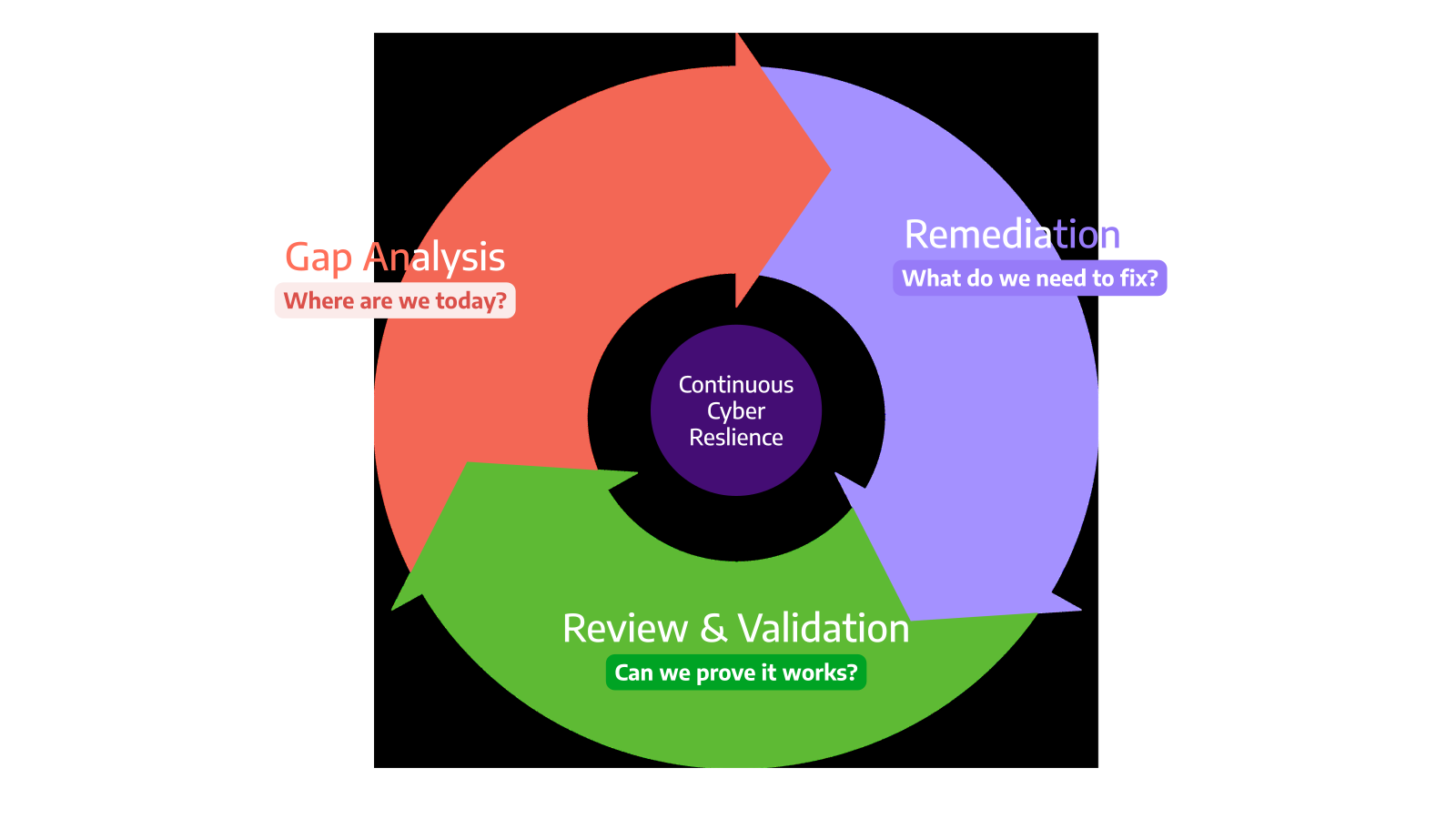
1. Start with Gap Analysis: Establish Your Baseline
The Thematic Review should be treated as a benchmark for what good looks like across governance, cyber risk, outsourcing, and continuity.
A gap analysis is the starting point. It gives a clear view of where you stand today and what needs to improve. Many credit unions are using maturity-based assessments across key areas such as governance, identity and access management, vulnerability management, incident response, and third-party assurance.
This creates a roadmap rather than a pass or fail outcome. It allows you to prioritise actions and plan improvements over time.
2. Remediation: Focus on What Matters Most
Once gaps are identified, the next step is remediation. This should be broken into manageable projects, not treated as one large programme.
Three areas are consistently emerging as priorities across the sector.
Incident Response, a major opportunity
Incident response is often one of the least mature areas. Many organisations have plans in place, but they are not tested, not well understood, or not aligned to real-world scenarios.
This is a significant opportunity. Improving incident response capability can have an immediate impact on resilience. It ensures that when an incident occurs, the organisation can respond quickly, contain the issue, and recover effectively.
It is also an area where regulatory focus is increasing. DORA is very specific about incident response requirements, including detection, reporting, and recovery. Strengthening this area now will deliver benefits across multiple frameworks.
Supply chain risk and third-party oversight
Third-party risk continues to be a challenge. Many credit unions rely heavily on external IT providers and suppliers. In some cases, contracts are outdated, responsibilities are unclear, or assurance processes are limited.
The Thematic Review places strong emphasis on outsourcing and supplier oversight. Credit unions need to understand who they depend on, what risks those relationships introduce, and how those risks are managed.
This includes due diligence, clear contractual obligations, and ongoing monitoring. Strengthening supply chain governance is essential for both compliance and operational resilience.
Resilience testing, proving it works
It is not enough to have controls in place. You need to know they work.
Resilience testing services, including penetration testing, vulnerability scanning, and scenario-based exercises, play a critical role here. They provide evidence that systems can withstand attack and that recovery plans are effective.
This moves the conversation from assumption to assurance. It also supports Board level oversight by providing clear, independent validation.
3. Review and Validation: Proving Progress
Cyber resilience is not a one-time exercise. It requires ongoing review and validation.
Boards and senior management must be able to demonstrate that controls are not only implemented, but effective. This includes regular testing, continuous monitoring, and periodic reassessment.
The focus is shifting from “what if” to “what happens when”. Organisations need to be ready to respond and recover, not just prevent.
There is no fixed endpoint. Resilience is a continuous journey, evolving alongside threats and regulatory expectations.
Approaching the Thematic Review:
Scaling the Approach: Making It Achievable
For many credit unions, particularly smaller ones, resourcing is a real challenge. Delivering across all areas internally is not always practical.
This is where IT managed service providers and cyber security partners can help. They can take on much of the operational burden and deliver services in a scalable way.
This makes the cost more manageable and ensures that controls are implemented effectively without overwhelming internal teams.
A Practical Starting Point
Breaking the Thematic Review into clear areas helps turn complexity into action.
For example, IT security and cyber risk management can be supported through policy frameworks, 24/7 security monitoring via a SOC or MDR, access control solutions such as Keeper or Delinea, training platforms like KnowBe4, and vulnerability management tools such as Checkscan.
Other areas, including IT continuity, governance, and outsourcing, can be addressed through structured professional services and GRC platforms.
Stronger Credit Unions, Safer Members
Meeting the Central Bank’s expectations requires effort and investment. However, the outcome is a stronger, more resilient credit union sector.
By starting with a clear gap analysis, focusing remediation on key risk areas such as incident response, third-party risk, and resilience testing, and embedding continuous review, credit unions can build lasting resilience.
This is not just about compliance. It is about protecting members, strengthening trust, and ensuring long-term stability in an increasingly complex threat landscape.
Arrange a call to map your Thematic Review requirements to clear, practical actions and build a roadmap towards stronger cyber resilience.